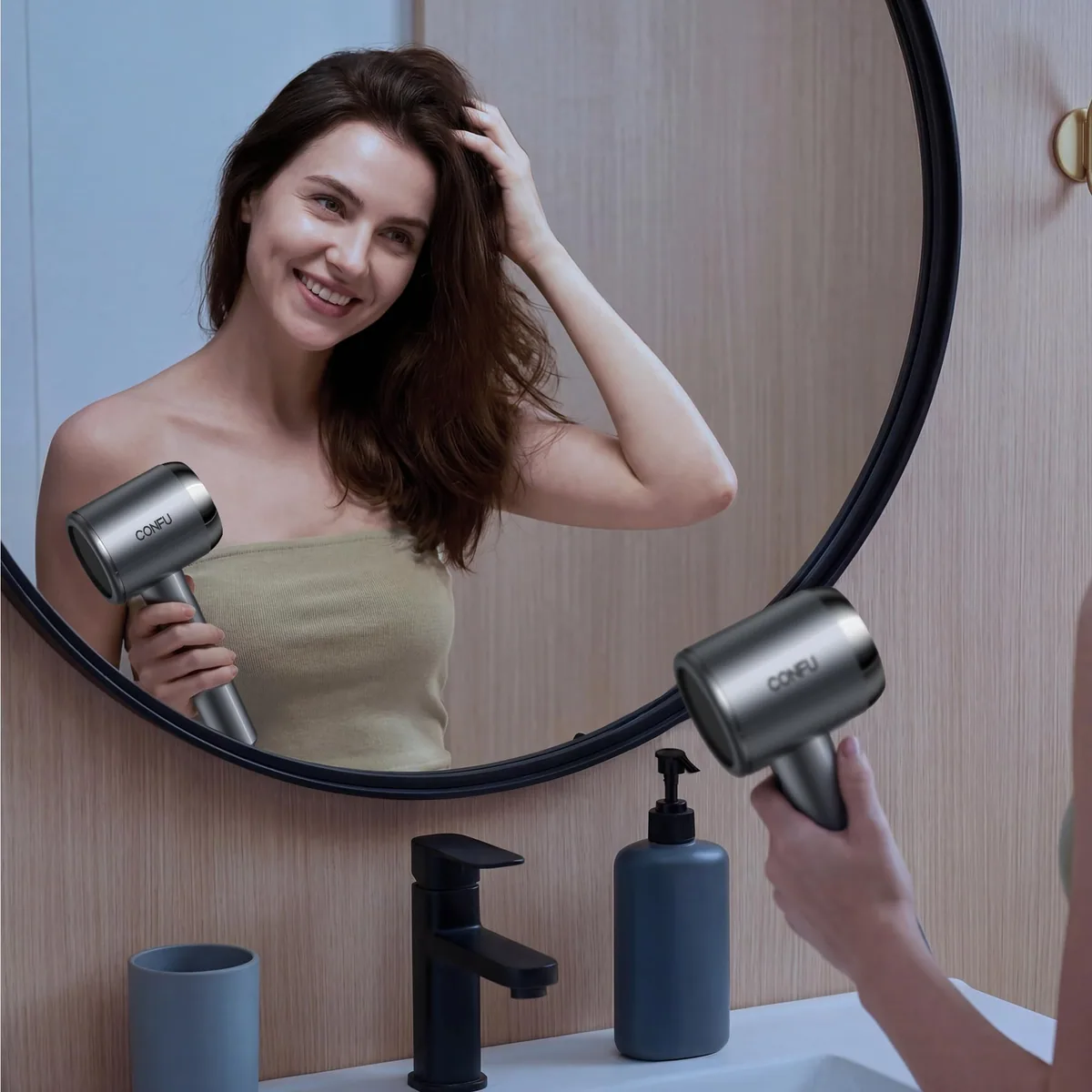
How to choose a CONFU hair dryer
Watts, motors, weight and settings, with every model in one table and a pick for each hair type.
Explainer
A high-speed dryer is not a stronger hair dryer. It is a different one, and the difference shows in your wrist before it shows in your hair.
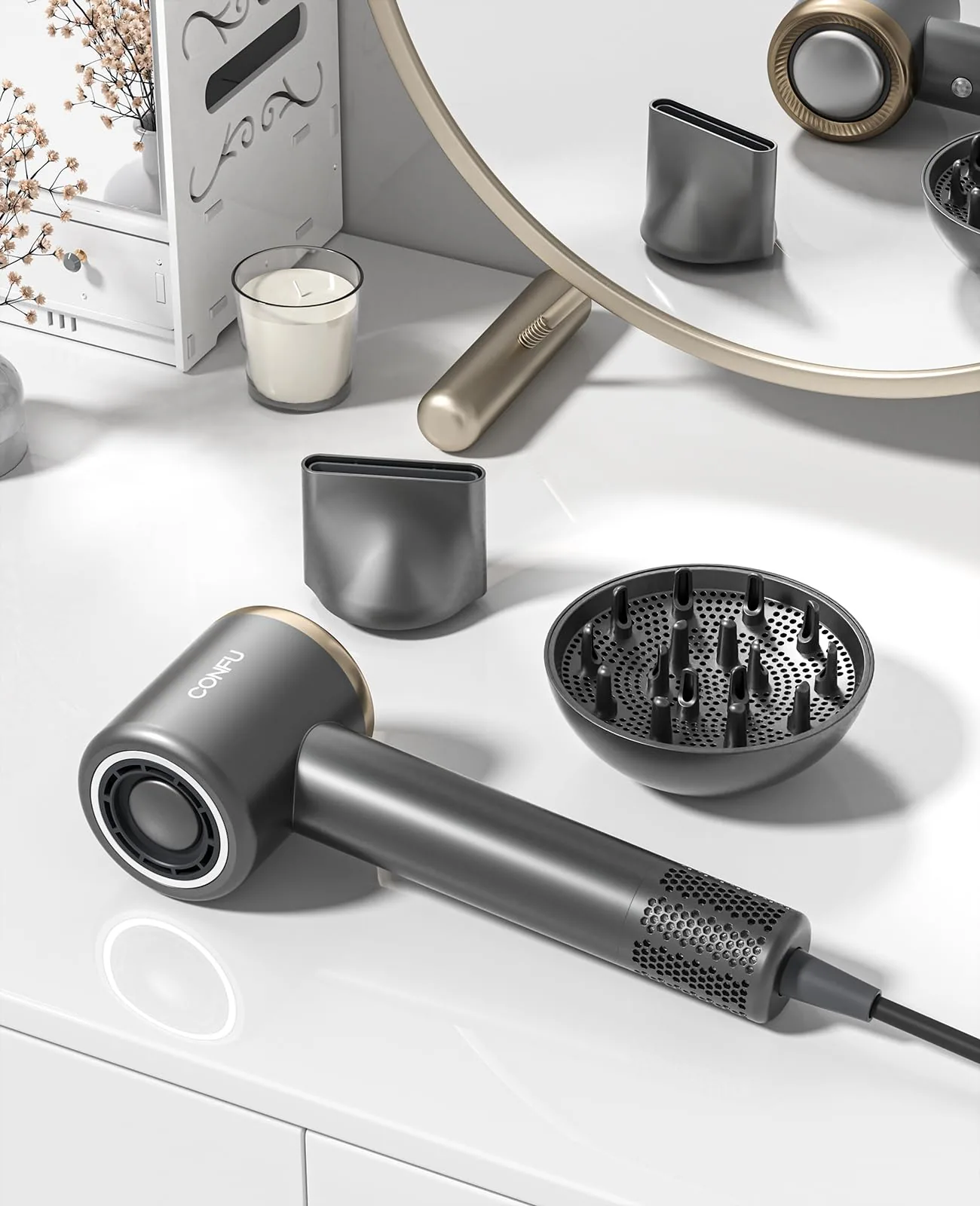
For decades a hair dryer was a heating coil with a fan behind it, and the only way to dry faster was to make both bigger. High-speed dryers changed the fan. They spin a much smaller one much faster, and that single change runs through everything else: the shape, the weight, the sound and the heat.
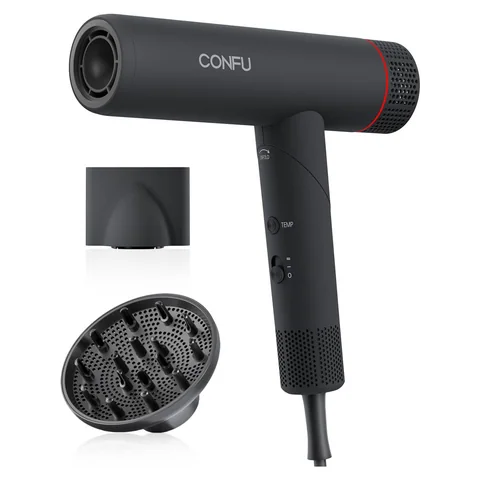
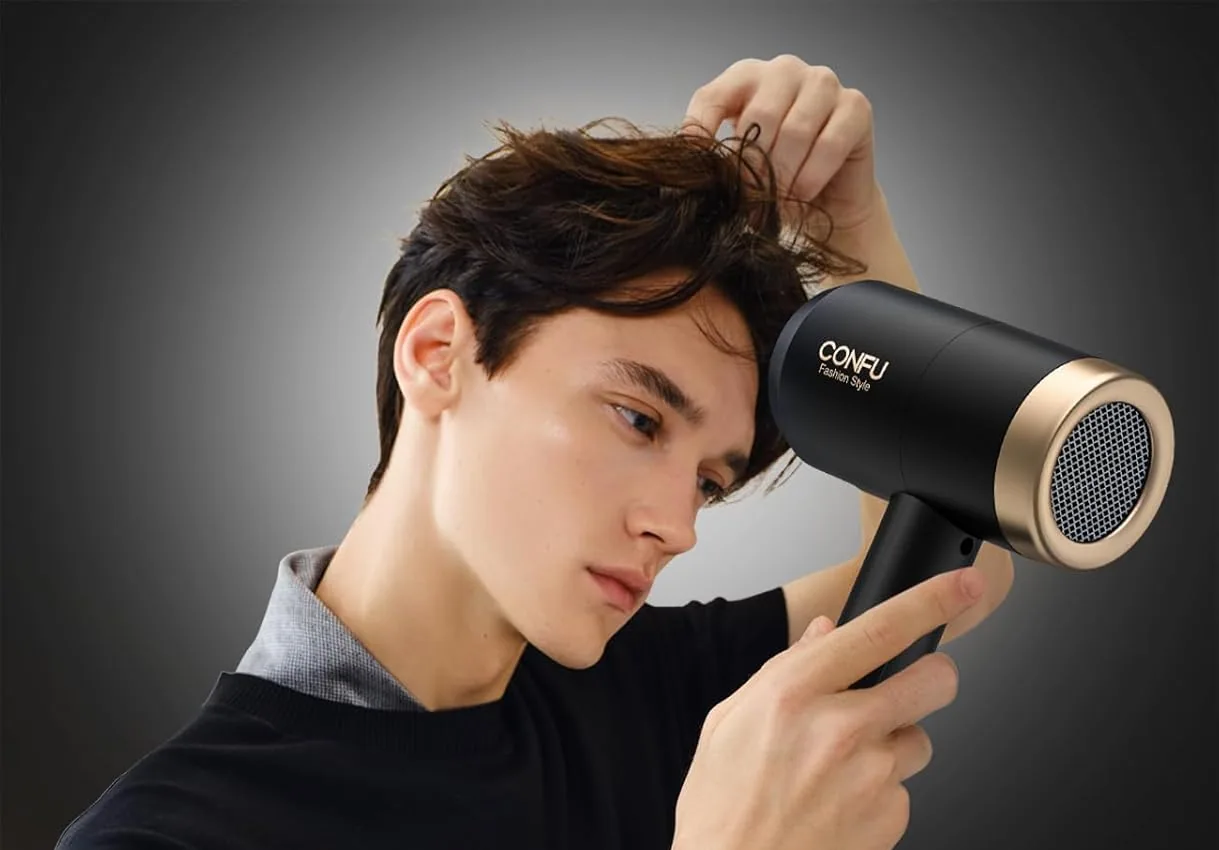
CONFU makes three of them: K13, F11 and F4. They share a 110,000 rpm motor and differ in almost everything around it. This explainer covers what the motor changes, what it does not, and how the three compare with each other and with our classic AC salon dryers. If you want the whole range in one place, start with the buying guide.
A high-speed hair dryer uses a small motor that spins at around 100,000 rpm or more: 110,000 rpm on all 3 CONFU models. A classic dryer's motor turns far slower: our 1600W Ionic is listed at up to 21,000 rpm.

The slower motor needs a wide fan to move enough air, so a classic dryer has a barrel the size of a soda can. The fast motor moves the same air with an impeller small enough to sit inside the handle. Take the fan out of the head and the head can shrink to a short tube that holds only the heater and the outlet.
That is the whole idea. Everything buyers notice follows from it:
Same motor speed, three different dryers. The table shows where they part ways.
| K13 | F11 | F4 | |
|---|---|---|---|
| Motor | High-speed motor, 110,000 rpm | Brushless motor, 110,000 rpm | Brushless motor, 110,000 rpm |
| Power | 1,500 W | 1,400 W | 1,600 W |
| Heat modes | 4: cool, low warm, warm, hot | 4: cool, warm, hot, alternating hot and cool | 3: cool, hot, cool and hot cycle |
| Speeds | 3 | 2 | 2 |
| Attachments | Magnetic concentrator, magnetic diffuser | Magnetic concentrator, magnetic diffuser | Concentrator, diffuser |
| Weight without cord | 0.95 lb | 0.81 lb | 0.82 lb |
| Folds | No | No | Yes |
| Shows the setting on | LCD display | Indicator lights | Temperature ring |
| Colors | 4 | 4 | 1 |
| Price | from $39.99 | from $48.44 | $72.19 |
| Buyer rating | 4.2 (648) | 4.5 (204) | 4.5 (41) |
The K13 is the one with the most control. It has three speeds where the others have two, and its small screen shows which speed and heat you are on. A Quick Shift button jumps to cool air, starts a hot and cool cycle, or takes you back to your own setting. It is also the least expensive, from $39.99.
The F11 is the quiet one, and the lightest of the three at 0.81 lb. Its motor is brushless, it runs as low as 51 dB, and it offers eight combinations of heat and speed. From $48.44.
The F4 is the one that folds. The handle swings up against the barrel, the cord is 11.5 feet long, and a ring of light shows the heat level. It costs $72.19, the most in our range.
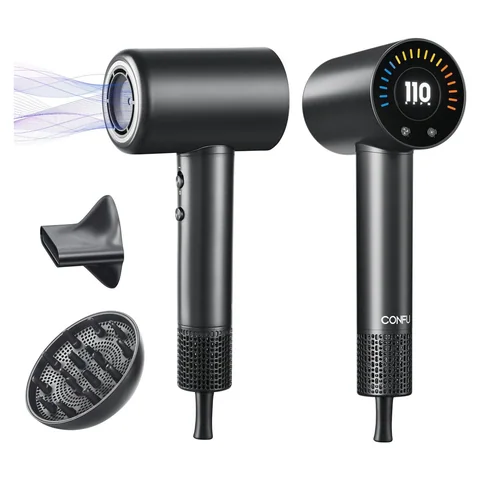
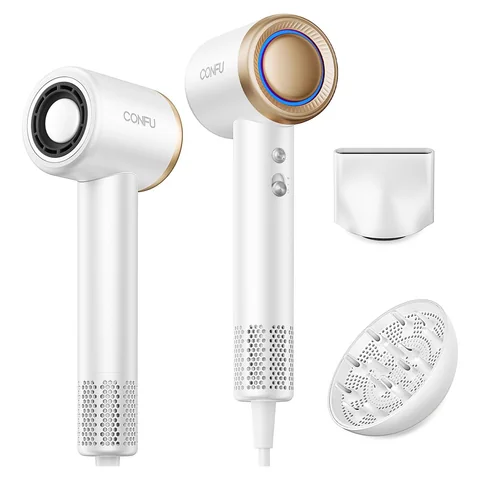
Hair dries when water leaves it, and water leaves in two ways: heat turns it to vapor, and moving air carries the vapor away. A classic dryer leans on heat. A high-speed dryer leans on air.
Drying time depends on your hair far more than on the dryer, so the useful evidence is what buyers report. The pattern in their reviews is consistent: the time drops, and the heat they use drops with it. A buyer of the F11 who has owned about twenty dryers described it this way:
I use medium-heat with this dryer, in comparison with using higher heat with prior dryers - yet my hair dries faster with this dryer.
And a buyer of the F4 explained the mechanism better than a specification sheet does:
The airflow is strong and concentrated, so it's moving water out rather than slowly baking it off, and the difference is obvious from the first use.
Two cautions belong here. First, a tight stream covers less hair at once than a wide one, so the technique changes: you move the dryer more and work in sections. Second, strong air tangles fine, straight hair if you aim it against the direction the hair grows. Point the nozzle from roots toward ends and start on the lower speed. One buyer with fine hair returned the F11 after it left that hair tangled.
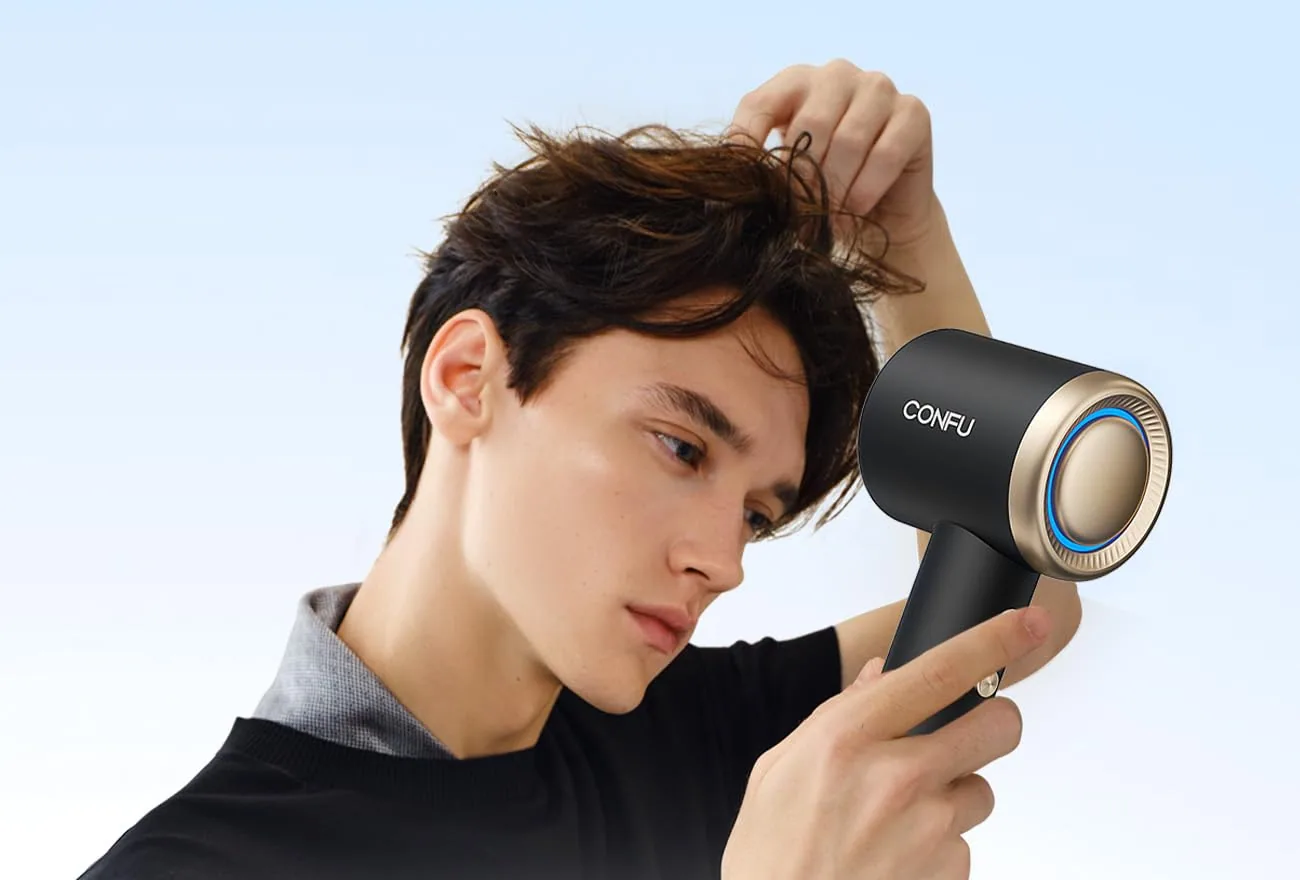
It can be, because it lets you dry at a lower temperature: the K13 lists a top air temperature of 95 °C, and both it and the F11 check their temperature about 100 times a second. No dryer is good for hair in itself. Lower heat for the same result is the gain.
The link between temperature and damage is one of the better-studied questions in hair care. A study in the Annals of Dermatology dried hair tresses thirty times under different conditions and examined them under an electron microscope. The conditions ranged from 47 °C at a distance of 15 cm to 95 °C at 5 cm. The finding on surface damage:
Hair surfaces tended to become more damaged as the temperature increased.
The same paper is the source of a result that surprises people. The hair left to dry at room temperature fared worse in one respect than the hair dried at a distance with a moving dryer. The authors' explanation:
It is conceivable that a long lasting wet stage is as harmful as a high drying temperature
Put the two findings together and you get the case for a fast, moderately warm dryer: get the water out quickly, without high heat. That is what a high-speed motor is for. The study used a conventional dryer on hair samples in a laboratory, so it supports the principle and says nothing about any particular product.
Dermatologists give the same advice in plainer words:
Use low or medium heat settings and a product to protect your hair from the heat.
A heater with nothing watching it gets hotter the longer it runs and the closer you hold it. The high-speed models put a sensor in the air stream. The K13 reads the temperature up to 110 times a second. The F11 reads it about 100 times a second and cuts the power if the dryer overheats. The F4 uses heat sensors that adjust in real time. When the reading drifts above the setting, the dryer trims the heater.
All three also offer a mode that alternates hot and cool air by itself. It keeps any one section from sitting under continuous heat, and it is worth trying on fine or color-treated hair.
The lower ceiling is not for everyone, and the reviews say so. The most detailed criticism of the K13 comes from a buyer with thick hair who gave it four stars:
It just doesn’t get hot enough for me.
That review describes the design working as intended, on hair it does not suit. If you have always dried on the hottest setting and like the result, a high-speed dryer will feel underpowered in the last few minutes, when the hair is nearly dry and air alone does less. An 1875-watt AC dryer is the better tool for that preference.
Quieter than a classic dryer, and different in pitch. The F11 runs as low as 51 dB on its lower speed, about the level of a conversation. The K13 and the F4 are described as low-noise on their pages without a figure.
Decibels are easy to misread, because the scale is not linear. The Occupational Safety and Health Administration explains it this way:
Decibels are measured on a logarithmic scale which means that a small change in the number of decibels results in a huge change in the amount of noise and the potential damage to a person's hearing.
So a difference of ten or twenty decibels between two dryers is a large difference to the ear. For a sense of where the numbers sit, OSHA also gives a rule of thumb for the level at which workplace noise starts to matter:
If you need to raise your voice to speak to someone 3 feet away, noise levels might be over 85 decibels (dBA).
A dryer at 51 dB is far below that. You can hold a conversation over it, which is the practical test. Buyers mention exactly this: one with tinnitus praised the F11 for having no harsh or high-pitched noise, and a buyer of the F4 called its sound a strong whoosh instead of a scream.
Two honest limits. The 51 dB figure is for the low speed; the high speed is louder, and no figure is stated for it. And the figure is a product specification, not a hearing-safety assessment.
Pick up a high-speed dryer after a salon dryer and the weight is the first thing you notice. The numbers explain why.
The gap matters most for two groups. People with long or thick hair hold a dryer up for many minutes at a time. And people with shoulder, wrist or hand trouble feel every ounce. A reviewer in their mid-seventies listed light weight third among the reasons the F11 was the best dryer they had owned, after quiet and airflow.
Light does not mean flimsy, but it does mean small parts. The motors in these dryers are precise and run fast, and they are less tolerant of lint than a big AC motor. Which brings us to cleaning.
Every hair dryer pulls room air in through a filter at the back, and every filter collects lint and hair. In a high-speed dryer the intake is small and the air moves fast, so a partly blocked filter costs more performance, sooner.
All three CONFU high-speed models answer this with a self-cleaning cycle that runs the motor backwards and blows the dust out the way it came in.
| Model | How to start the cleaning cycle | Filter |
|---|---|---|
| K13 | With the power on, hold Quick Shift and press the power switch. Runs for 10 seconds. | Removable |
| F11 | Long-press the temperature button, then turn on the power. | Removable, magnetic cover |
| F4 | Press and hold for 3 seconds. | Cleared by the reverse cycle |
Run it every week or two, and sooner if the dryer sounds different. A buyer of the K13 with a lot of long hair learned the signs the hard way and wrote them down for the next person:
I watched a video on my dryer. And it has a way to clean it out. I did that and it started working.
The dryer had started to whine and smell after cutting out a few times. Those are the three symptoms of a blocked intake: a change in pitch, a hot smell, and the overheat protection switching the dryer off. Clean first. If a clean dryer still cuts out, it needs replacing under warranty.
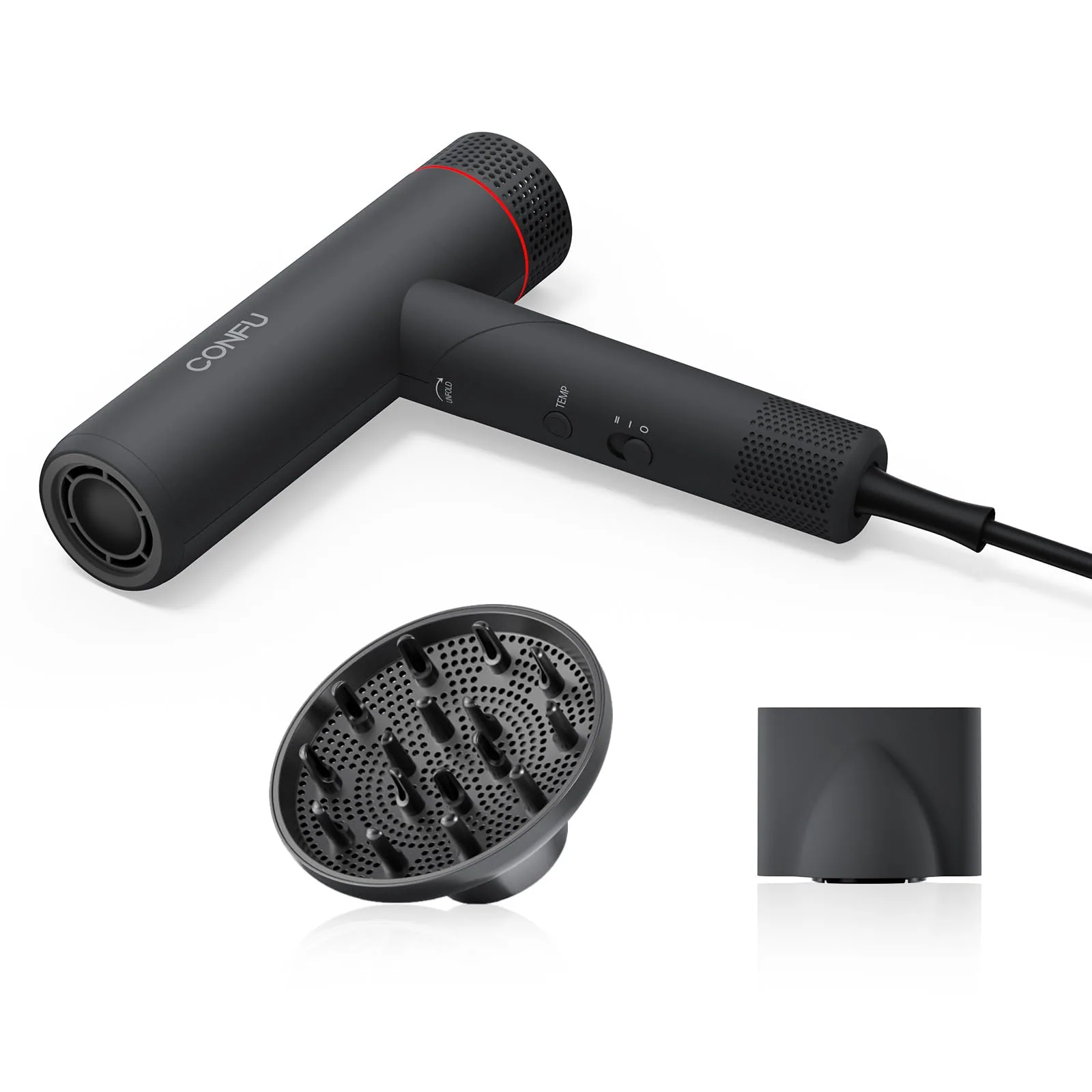
Small dryers have little room for switches, so each of the three handles its controls differently.
The K13 has a display on the back of the head. It is the easiest of the three to read at a glance. One buyer points out a quirk worth knowing: switched off between sections, the dryer comes back on at its default, and the speed and heat have to be selected again.
The F11 has two buttons and a colored display for the temperature. A buyer who prefers simple controls counted that as a feature. Another found that the heat button, placed near the top of the handle, can be pressed by accident, and solved it by holding the dryer lower.
The F4 uses a ring of light around the barrel to show heat, and its temperature button sits on the handle where the hand grips. It has no steady warm setting: the modes are cool, hot, and a cycle of the two.
None of this should decide the purchase, but it is the kind of thing that annoys or pleases you daily. If you change settings mid-session, the K13's screen helps. If you set the dryer once and leave it, any of the three will do.
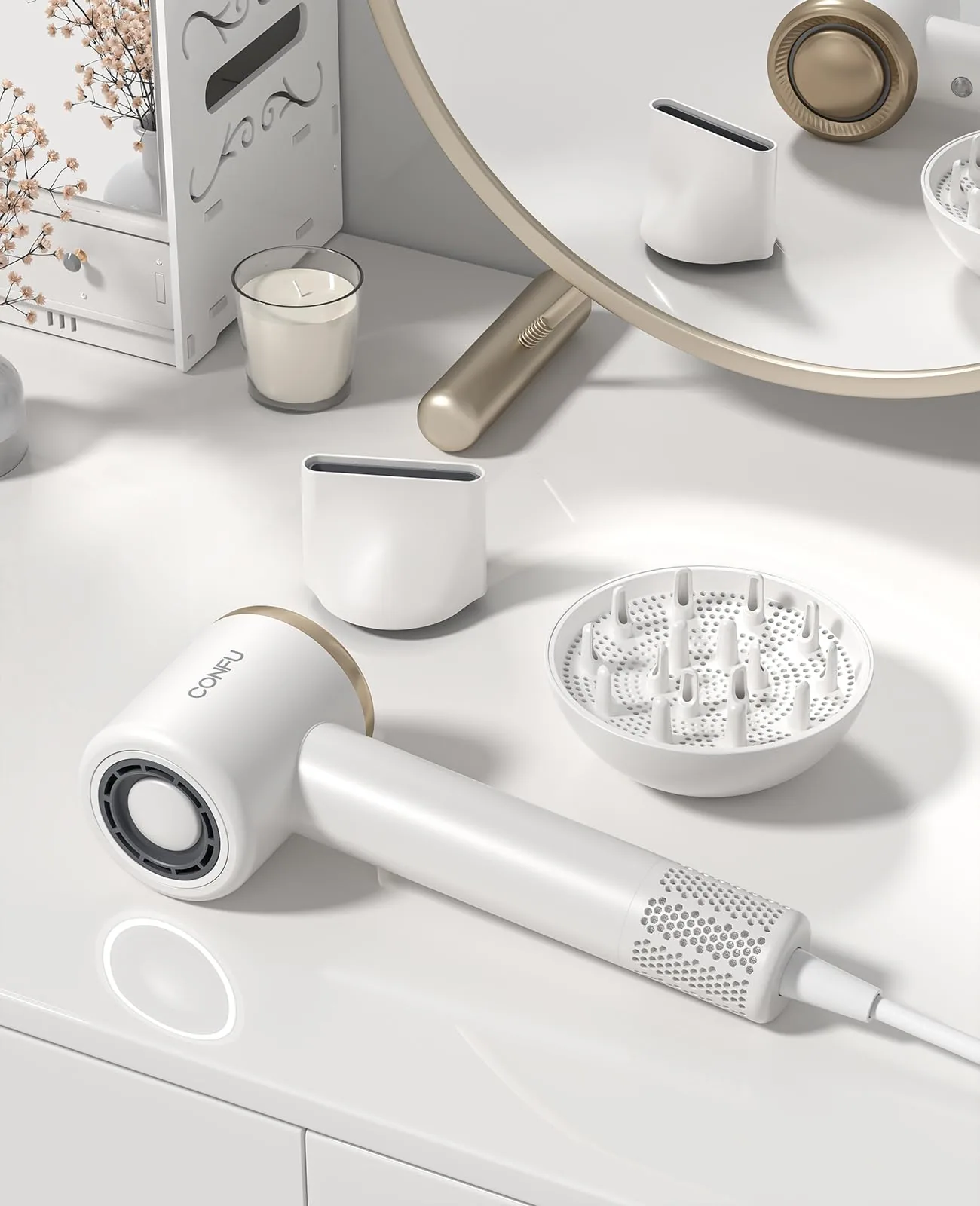
K13 and F11 hold their concentrator and diffuser with magnets. The nozzle snaps on in any rotation and comes off with one hand. The F4 uses conventional push-on attachments.
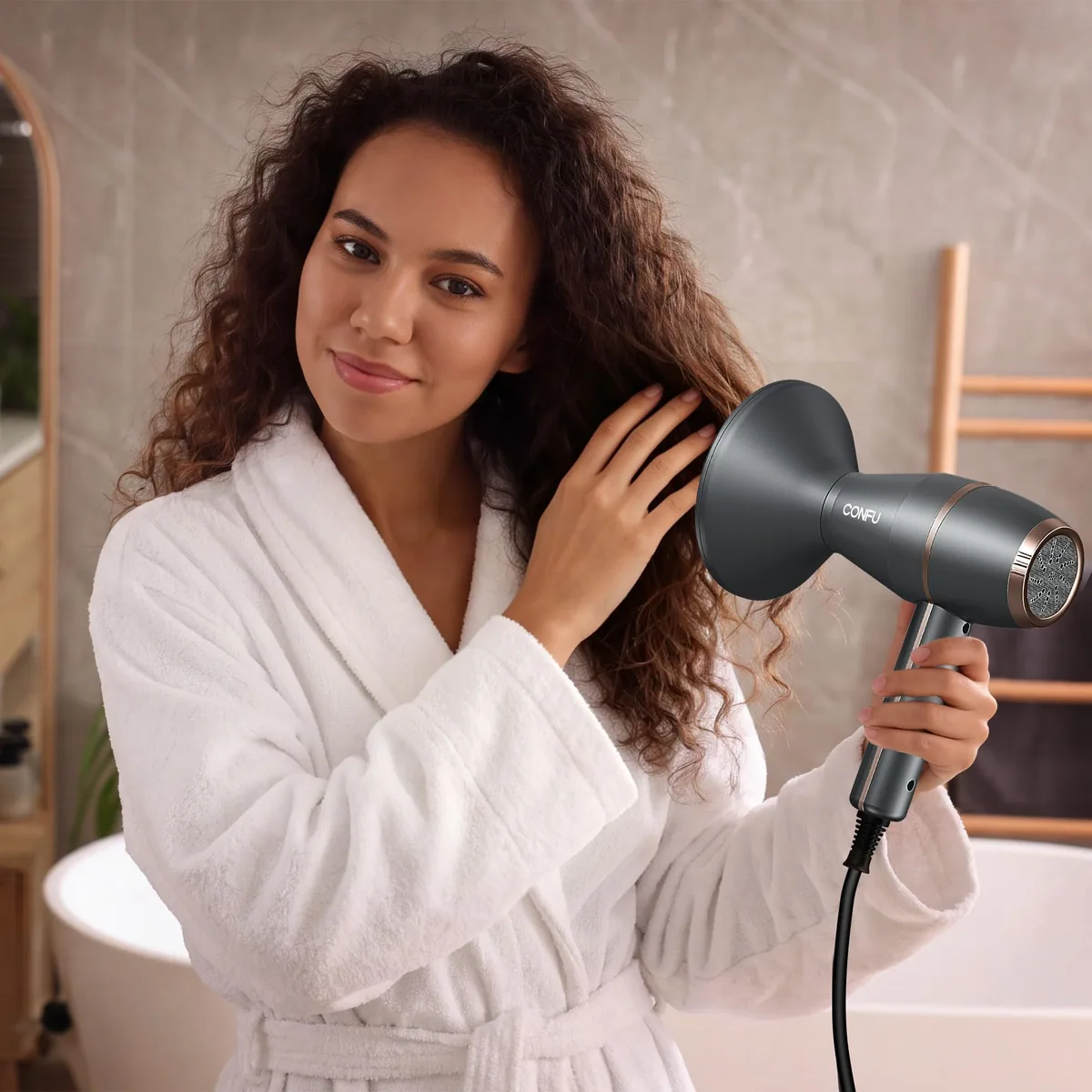
The concentrators are excellent on all three: a fast, narrow stream through a flat nozzle is exactly what a blowout wants. The diffusers are a compromise. A short head has a narrow outlet, and a diffuser sized to match holds less hair than the deep bowl on a full-size dryer. For waves and loose curls that is fine. For tight curls, read the diffuser guide first, and consider a model with a larger bowl.
If you are choosing between the two kinds, these are the lines that matter.
| High-speed | AC salon | |
|---|---|---|
| Models | K13, F11 and F4 | Pro Salon, AC Motor 1875, Salon Ionic and Ionic 1875 |
| Weight | 0.81 to 0.95 lb without cord | 1.5 to 2.49 lb as listed |
| Power | 1,400 to 1,600 W | 1,875 W |
| Dries mainly with | Air speed | Heat and volume of air |
| Price from | $39.99 | $30.39 |
| Better choice when | You dry daily, want low weight and moderate heat | Hair is long and thick, or you like high heat |
The price gap is real: the least expensive high-speed model costs $9.60 more than the least expensive AC salon dryer. What the extra buys is comfort. Whether that is worth it depends on how many mornings a year you spend with a dryer in your hand.
Each of these dryers has an ion generator with a stated output: 500 million negative ions for the K13, 300 million for the F11. The generator charges the air leaving the dryer. The aim is to cancel the static that makes fine hair fly away when it is dried fast.
Treat the figures as a way to tell that a generator is fitted, not as a score to compare across brands, since there is no common method behind such numbers.
What buyers report is narrower and more believable: less frizz and less static than with their previous dryer. Several reviews of the K13 and the F11 say so, and a few say they noticed no difference. If static is your main complaint, an ionic dryer is worth trying. If your hair is coarse and rarely flies away, you will not miss it.
Three kinds of buyer are better served elsewhere in the range.
The K13 lists a two-year warranty. The F11 and the F4 carry 12 months with replacement, and 30 days of free returns. Reviews of all three include a small number of early failures, as reviews of every dryer do. Keep the order record: a warranty request goes through the order page at our retail partner.
Two habits help. Run the cleaning cycle before the dryer starts to sound different, not after. And let the dryer run on cool for a few seconds before you switch it off, so the heater is not left hot with no air moving over it.
All three high-speed models end in an ALCI safety plug, the block with test and reset buttons that cuts the power if current leaks, as it would if the dryer met water. Federal rules require this kind of protection on hand-held dryers. The regulation lists as a hazard:
Hand-supported hair dryers that do not provide integral immersion protection in compliance with the requirements of section 5 of UL 859, or section 6 of UL 1727
Press test, then reset, when the dryer is new. And keep it away from water regardless, because the plug is a backup.
Like every CONFU dryer, these are built for 125 volts and are not dual voltage. They travel well inside North America, especially the F4, which folds. They should not be plugged into a 230-volt outlet, with or without an adapter.

A high-speed dryer is a comfort upgrade more than a power upgrade. If your current dryer is heavy, loud and hot, you will notice the change on the first morning. If it already suits you, there is no reason to switch.
Nothing here is medical advice. The noise figures are the ones stated for each model and are not a hearing-safety assessment.
Sources read for this guide
Watts, motors, weight and settings, with every model in one table and a pick for each hair type.
Which CONFU dryers include a diffuser, the settings to use and the technique, step by step.